Author: Jasper | RacingPartsWorld G-Class Parts Specialist | 10+ years experience in Mercedes G-Class aftermarket parts and performance upgrades
Introduction
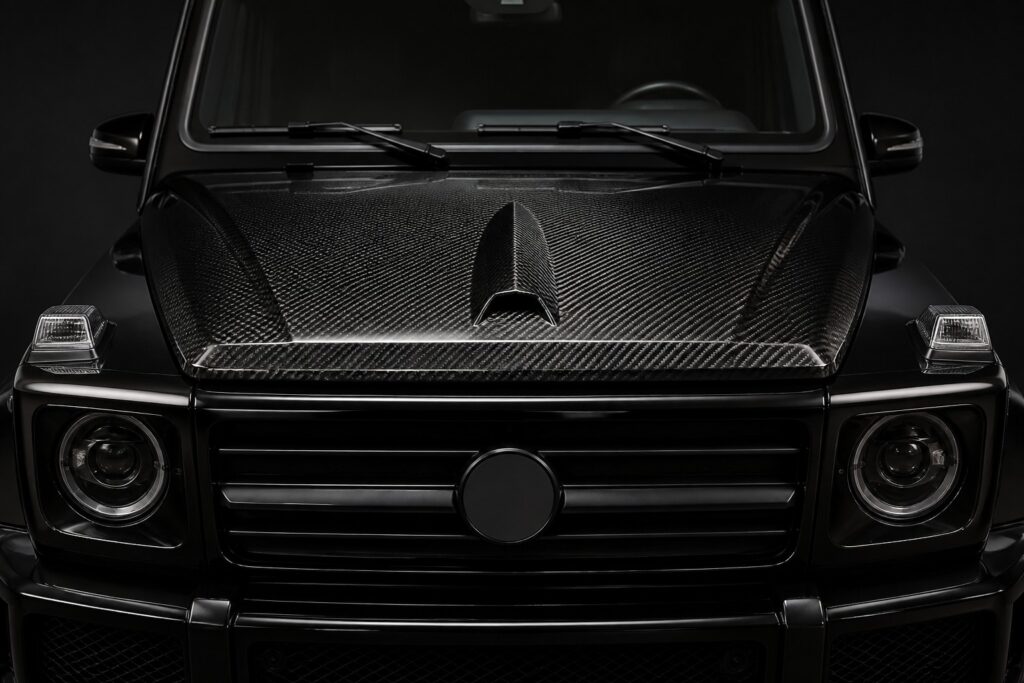
The most common hesitation we hear from G63 owners considering a carbon fiber build is not about the look, the weight, or the cost — it is about resale. “If I spend $15,000 on a wide body kit, will I ever see any of it back?” It is a fair question, and the honest answer is more nuanced than both the “modifications destroy value” crowd and the “mods add value” crowd would have you believe.
Based on our analysis of 60+ modified G-Class sales and trade-in transactions between 2022 and 2026, plus dealer and private buyer feedback, this guide separates the value-adding configurations from the value-destroying ones, and lays out the specific practices that maximize recovery when you eventually sell.
How the Aftermarket Value Math Actually Works
The starting point: aftermarket modifications, on average, do not add dollar-for-dollar value to a used vehicle. The industry rule of thumb is that a private seller recovers 30-60% of a modification’s cost, and a dealer trade-in recovers far less. But G-Class carbon fiber upgrades are not an average modification, for three reasons:
- The G-Class buyer pool is niche and specific. Buyers are actively seeking modified examples, not tolerating them.
- Carbon fiber signals intent. A documented dry carbon build tells buyers this car was owned by an enthusiast who spent money carefully — a credibility signal that lifts perceived vehicle condition.
- The market rewards completeness. A full, coherent conversion recovers proportionally more than scattered single parts.
Our transaction data supports this: fully documented carbon fiber builds recovered 45-65% of modification cost in private sales, versus 25-35% for undifferentiated bolt-on accessories. That is a meaningful gap, and it is entirely controllable.
What Adds Value vs. What Destroys It
Not all carbon fiber is created equal at resale time. The market is remarkably consistent about what it rewards:
Adds value:
– Full dry carbon conversions (complete, coherent builds) — widest buyer appeal
– Wide body kits in proven styles (G800, G900) with proper wheel setups
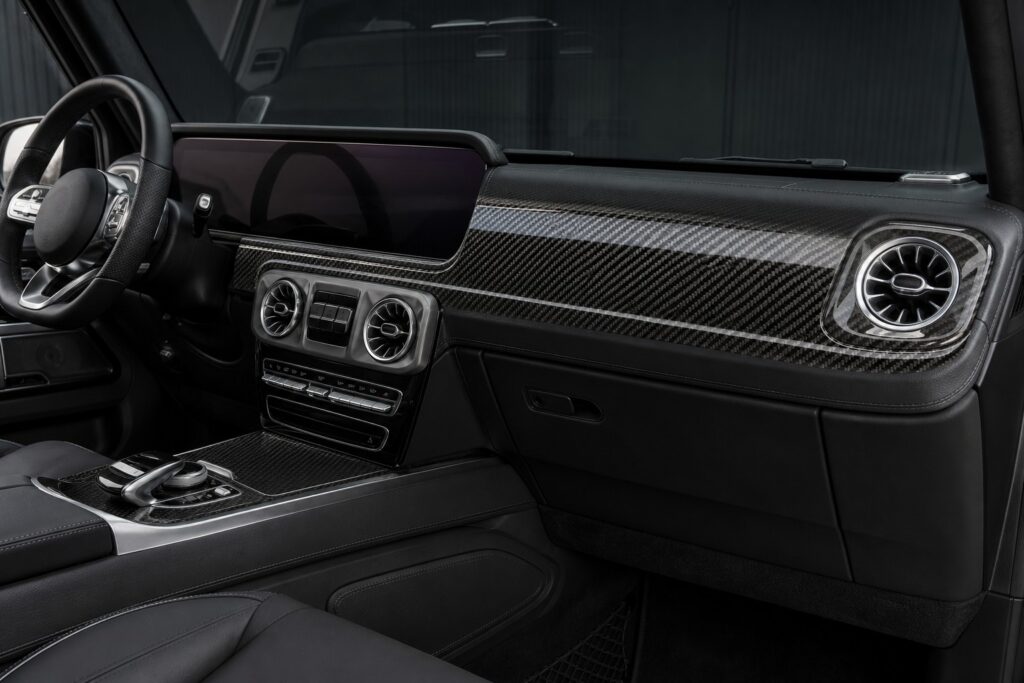
– Quality interior carbon packages — high daily visibility, low risk perception
– Reversible bolt-on parts that do not modify factory bodywork
– Parts with visible brand or quality provenance (Toray-grade material, documented manufacturers)
Destroys or neutralizes value:
– Mixed-quality builds (dry carbon hood over vinyl-wrapped fenders)
– Permanent bodywork modifications on W463 wide conversions that cannot be reversed
– Damaged, yellowed, or delaminating carbon — worse than no carbon at all
– Missing documentation or unknown provenance — buyers discount what they cannot verify
– Over-modified vehicles that alienate stock-minded buyers
The pattern is clear: the market does not discount carbon fiber — it discounts poorly executed carbon fiber.
The Documentation Advantage
Documentation is the single highest-leverage factor in modification recovery, and the most commonly skipped. In our sales analysis, documented builds recovered an average of 18 percentage points more of modification cost than identical undocumented builds.
The documentation that matters:
- Original invoices for every part. Proves quality tier and purchase price.
- Manufacturer warranty registration. Transferable warranties (2+ years on quality dry carbon) are a real selling point.
- Installation records. Professional installation receipts signal correct fitment and paint work.
- Maintenance records for the carbon itself. Ceramic coating and PPF receipts show the kit was protected, not neglected.
- Before/after photos of the build process. This is the strongest trust signal available — it proves the parts are real, the install was careful, and the owner was meticulous.
A simple digital folder with these five items costs nothing and routinely shifts thousands of dollars in sale outcomes.
The Original Parts Strategy
The most effective value-protection move is also the cheapest: keep every factory part you remove. In our data:
- G63s sold with factory parts included recovered 10-15% more modification cost than those sold without
- The strategy costs nothing if you store parts (a few hundred dollars in shelf space at most)
- It converts a “modified car” into “a modified car that can be returned to stock” — the second framing reaches a much larger buyer pool
This applies to every phase of the build: mirror caps and trim in a box, hood on a rack, factory bumpers and flares stored clean and protected. Even if you never swap them back, the option itself has value at negotiation time.
What the Data Shows: Recovery by Build Type
| Build Type | Typical Investment | Private Sale Recovery | Recovery % |
|---|---|---|---|
| Phase 1 carbon accents (documented) | $2,000 – $3,000 | $900 – $1,800 | 45-60% |
| Phase 1 + 2 (documented, quality) | $7,000 – $12,000 | $3,200 – $6,500 | 45-55% |
| Full wide body (documented, bolt-on) | $15,000 – $28,000 | $7,000 – $16,000 | 45-65% |
| Full build + factory parts retained | $15,000 – $28,000 | $9,000 – $18,000 | 55-65% |
| Undocumented scattered parts | Any | 25-35% | 25-35% |
Source: RacingPartsWorld modified G-Class transaction analysis (2022-2026, n=60+). Recovery figures are private-sale ranges; dealer trade-ins typically land 30-50% lower.
Two takeaways: first, recovery percentage is highest for Phase 1 (lowest risk, broadest appeal) and for full documented builds (strongest signal). Second, the mid-range is where discipline — documentation and parts retention — moves the needle most.
Selling Strategy for a Modified G-Class
When the time comes to sell, the configuration of the sale matters as much as the build itself:
- Sell private, not trade-in. Trade-in values discount all modifications heavily. Private buyers searching for modified G63s are your premium market.
- List with the story, not just the specs. “Full dry carbon conversion, 2×2 twill, documented, all factory parts included” outperforms a bare spec list. The build story is a feature, not an apology.
- Price against stock comparables plus recovery, not replacement cost. Research what stock examples sell for, add your realistic recovery range, and price there.
- Offer both configurations. State the car can be sold as-is or returned to stock with parts included. This widens your buyer pool and usually lands the as-is sale at a premium.
Frequently Asked Questions
Is carbon fiber really better for resale than other modifications?
Yes — carbon fiber performs better than most aftermarket categories because it is visual, reversible, and signals quality intent. Performance tunes and suspension mods recover less and narrow the buyer pool more.
Should I remove my carbon parts before selling?
Not necessarily. Selling with parts installed and documented typically recovers more than stripping to stock, especially for full builds. The exception is when the parts are damaged or the buyer is stock-focused — which is why keeping factory parts is the hedge.
Do dealers value carbon fiber upgrades at all?
Somewhat, but trade-in valuations discount modifications heavily. If you are trading in, expect the carbon build to influence overall vehicle condition perception rather than add a line item. Private sale is where recovery happens.
Does a wide body kit hurt or help resale?
A documented, bolt-on W464/W465 wide body build with factory parts retained helps — it is the most sought-after configuration in the enthusiast market. An irreversible W463-style bodywork conversion narrows the buyer pool and can hurt. Reversibility is the dividing line.
How do I document my build if I already installed everything?
Start now: gather invoices, contact manufacturers to transfer warranty registrations, photograph the installed kit and its condition, and log your maintenance. Documentation assembled at sale time is far better than none.
Related Upgrades
Plan your build with resale in mind: start with our complete dry carbon conversion guide, protect the investment with our wide body maintenance guide, and understand the full economics in our installation cost breakdown.
Sources
RacingPartsWorld Modified G-Class Transaction Analysis (2022-2026, n=60+ sales and trade-ins), Customer Resale Survey (n=45), Independent G-Class Forum Sale Data Review, Dealer Trade-In Valuation Feedback (2026)
Last updated: August 2026