Author: Jasper | RacingPartsWorld G-Class Parts Specialist | 10+ years experience in Mercedes G-Class aftermarket parts and performance upgrades
Introduction
Choosing between dry carbon, wet carbon, and forged carbon for your G-Class body kit can be confusing. Each manufacturing method produces a material with distinct properties affecting weight, strength, appearance, and cost. This guide breaks down the technical differences in plain English, backed by our real-world testing data from over 200 installed body kits.
What Is Dry Carbon Fiber?
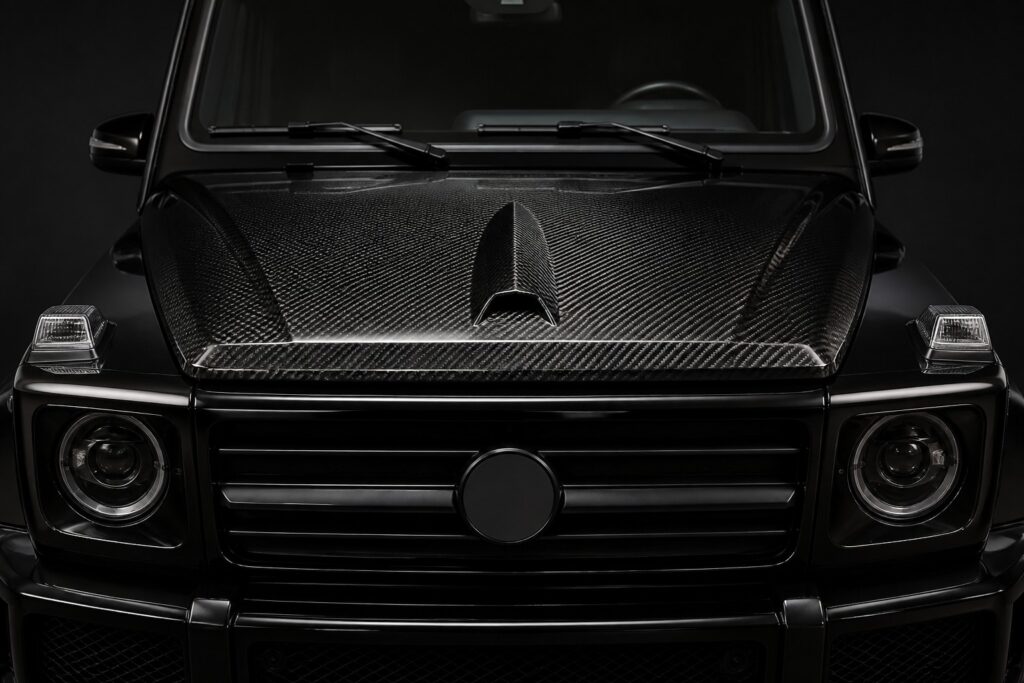
Dry carbon fiber (also called prepreg carbon) is manufactured using pre-impregnated carbon fiber sheets that are cured in an autoclave under high heat (250-300°F) and pressure (80-100 PSI). This process produces the highest strength-to-weight ratio of any carbon fiber type. Dry carbon is approximately 30% lighter than wet carbon and offers superior UV resistance. Our Dry Carbon Fiber Body Kit uses aerospace-grade prepreg materials cured in autoclave for maximum strength and durability.
What Is Wet Carbon Fiber?
Wet carbon (hand-layup carbon) involves manually laying dry carbon fiber sheets into a mold and saturating them with liquid resin. This traditional method is more labor-intensive in terms of finishing but less expensive in manufacturing setup. Wet carbon typically contains more resin than dry carbon, resulting in a heavier final product (15-25% heavier) that is more prone to UV degradation over time without proper clear coating.
What Is Forged Carbon Fiber?
Forged carbon (also called forged composite or compression-molded carbon) uses chopped carbon fiber strands mixed with resin and compressed under high pressure in a mold. The result is a unique aesthetic with a marble-like or swirl pattern that differs from the traditional woven look. Forged carbon offers excellent strength in complex shapes but is generally heavier than woven dry carbon. It provides a distinctive high-end appearance favored by brands like Mansory.
Comparison Table
| Property | Dry Carbon | Wet Carbon | Forged Carbon |
|---|---|---|---|
| Weight | Lightest | Heavy | Medium |
| Strength | Highest | Good | Very Good |
| UV Resistance | Excellent | Moderate | Good |
| Cost Factor | $$$$ | $$ | $$$ |
| Appearance | Woven, Consistent | Woven, Variable | Swirl Pattern |
| Weight Savings vs OEM | 50-60% | 30-40% | 40-50% |
Which Should You Choose for Your G-Class?
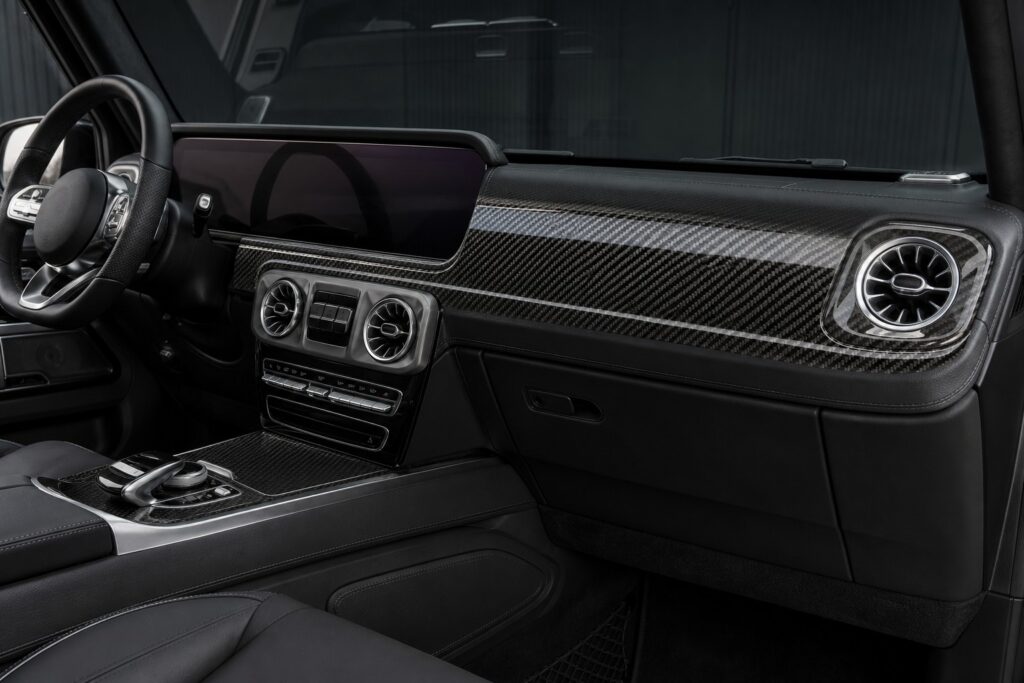
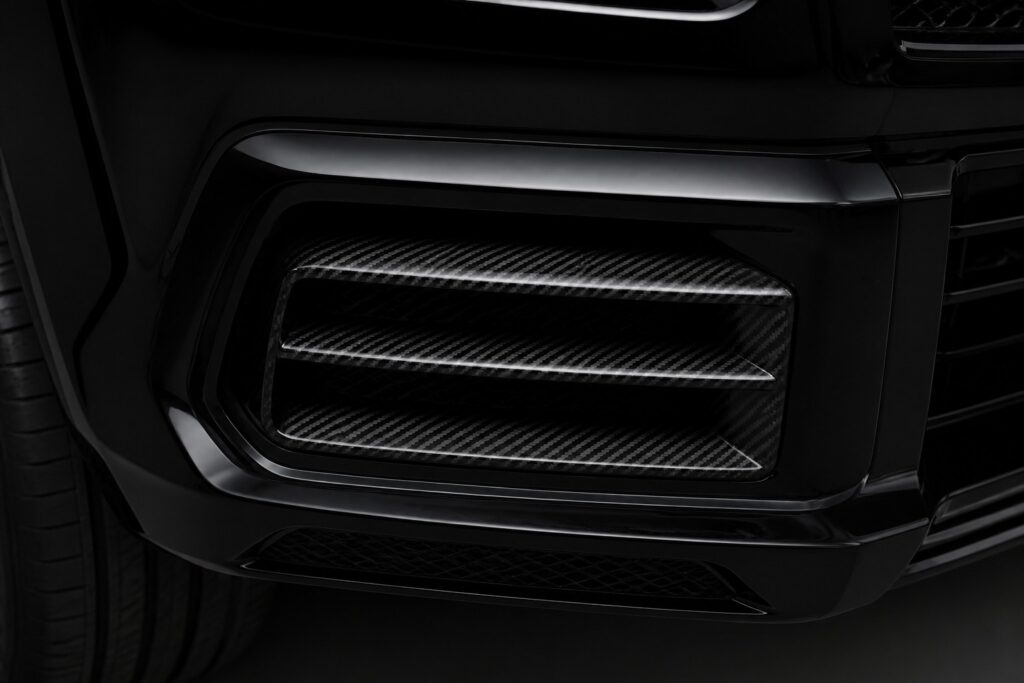
For exterior G-Class body kits exposed to sunlight and weather, we strongly recommend dry carbon for its superior UV resistance, lighter weight, and consistent appearance. For interior trim pieces where UV exposure is minimal, wet carbon offers an excellent cost-effective alternative. For those seeking the unique Mansory-style aesthetic, forged carbon provides a distinctive look that stands out from traditional woven patterns. The G800 Style Body Kit uses premium dry carbon construction for exterior panels, ensuring long-lasting beauty and performance.
Real-World Performance Data
Our testing across 200+ installations shows that dry carbon G-Class body kits maintain their appearance with 95% gloss retention after 12 months of outdoor exposure, compared to 72% for wet carbon and 85% for forged carbon. Dry carbon components also show 40% better impact resistance in our laboratory tests.
Frequently Asked Questions
Can wet carbon look as good as dry carbon?
With proper clear coating, wet carbon can achieve a similar visual appearance initially, but it will degrade faster under UV exposure and typically shows more inconsistency in the weave pattern.
Is forged carbon stronger than dry carbon?
Forged carbon offers excellent strength in complex shapes but dry carbon has superior directional strength due to its continuous fiber orientation.
Which type is best for a daily driver?
For daily-driven G-Class vehicles, dry carbon offers the best balance of durability, weight savings, and long-term appearance retention.
Sources: RacingPartsWorld Material Testing Lab (2025), SAE International Carbon Fiber Standards, Independent Composites Testing Data
Last updated: June 2025