Author: Jasper | RacingPartsWorld G-Class Parts Specialist | 10+ years experience in Mercedes G-Class aftermarket parts and performance upgrades
Introduction
The G-Class is one of the few luxury SUVs that genuinely welcomes winter — its four-wheel drive, ground clearance, and legendary capability are built for it. But capability does not mean immunity. Winter exposes every weak point on a vehicle: cold batteries, old tires, degraded fluids, and — for modified vehicles — the specific vulnerabilities of carbon fiber and aftermarket finishes in cold, salted conditions.
This guide is the complete G-Class winter preparation checklist, covering mechanical readiness, the modifications that make winter ownership easier, and the specific care your carbon fiber and custom parts need through the cold months.
Mechanical Winter Readiness
The baseline checks that make winter trouble-free:
- Battery health: cold is the battery’s enemy. Test the battery and charging system before the temperature drops — a weak battery fails at the worst moment
- Winter tires: the single most important winter change. All-season tires lose grip below roughly 45°F (7°C); winter tires with the right compound and tread transform the G-Class in snow. See our wheels and tires upgrade guide for a second set of wheels dedicated to winter rubber
- Fluids: verify coolant protection rating for your climate, check wiper fluid for winter rating, and confirm oil viscosity suits the cold
- Wipers and glass: replace worn wipers, verify the rear wiper and washer, and treat the glass for ice
- Heating system: test the heater, defroster, and heated seats before you need them
- Emergency kit: blanket, shovel, ice scraper, booster cables, and traction aids — the G-Class gets you far; the kit gets you home
Winter Driving: Using the G-Class’s Capability
The G-Class has systems most owners underuse in winter:
- Drive mode selection: the low-range and off-road modes manage traction in deep snow — know how to select them before you need them
- The differential locks: on models equipped, the center and rear locks are the G-Class’s secret weapon in deep snow — practice engaging them in safe conditions
- Ground clearance advantage: the G-Class clears snow other vehicles high-center on — but never mistake capability for invincibility; carry the recovery gear for the stuck moments
Winter Care for Carbon Fiber and Aftermarket Parts
Modified vehicles need specific winter attention:
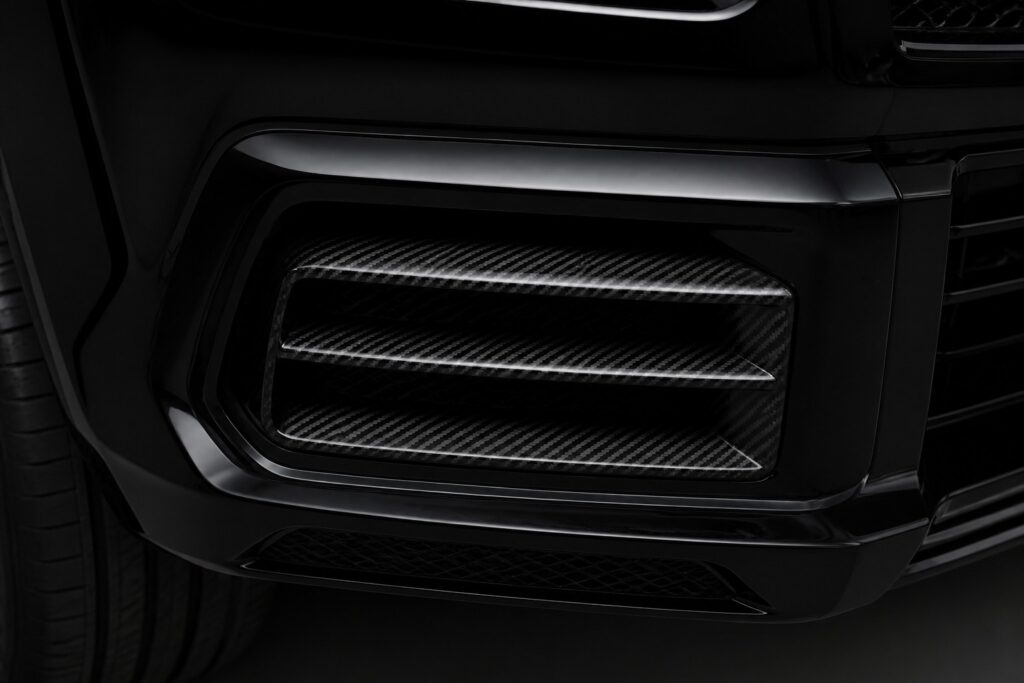
- Carbon fiber in the cold: quality dry carbon with UV-stabilized clear coat handles cold without issue. The risks are mechanical, not thermal — ice scrapers on carbon hoods and splitters, and frozen debris impacts
- Salt exposure: road salt is the carbon clear coat’s and the paint’s enemy. Salt creeps into panel edges and corrodes exposed interfaces. Weekly underbody and wheel-arch rinses through winter are the single best protection — the same discipline as our wide body maintenance guide
- PPF and coating: if your build carries paint protection film or ceramic coating, winter is where they earn their keep — verify the film edges are sealed before the salt season
- Winter washes: use touchless or hand washes through winter; brush washes grind salt into the clear coat
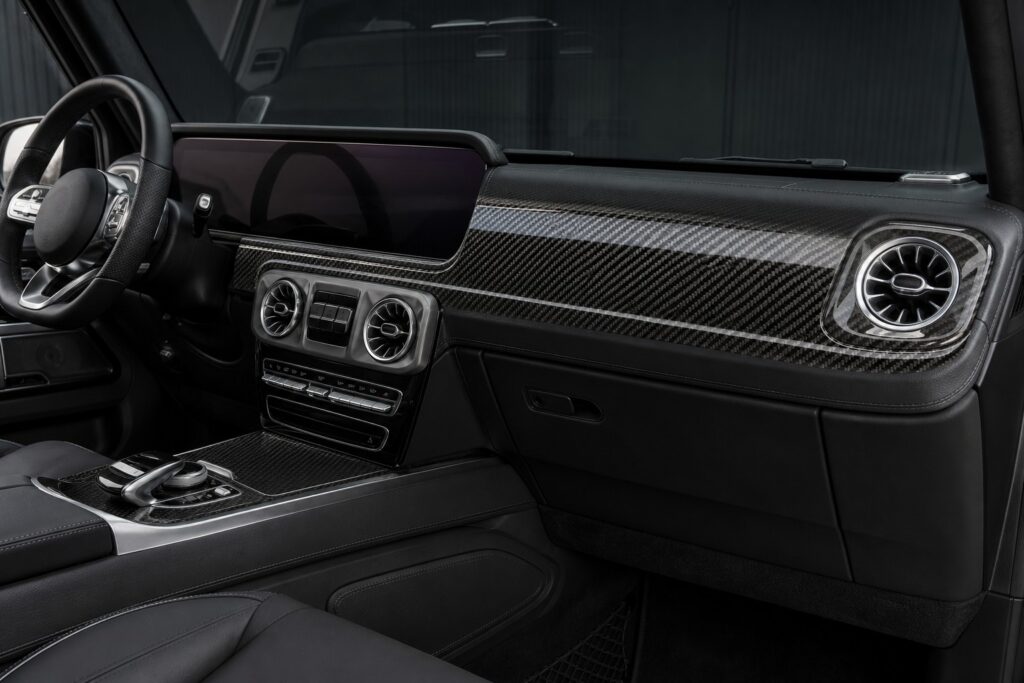
- Carbon interior: cold interiors cause condensation; dry the cabin properly to protect carbon trim and electronics
Seasonal Upgrades Worth Doing
A few modifications make winter ownership genuinely better:
- Heated upgrades: verify heated seats, steering wheel, and mirrors all function — repair them before winter if not
- LED lighting: winter darkness makes good lighting critical — the upgrades in our smoked black LED headlights guide and G63 smoked lighting package guide improve visibility in low sun and long nights
- All-weather mats: protect the cabin from slush and salt — see our interior storage and organization guides for the cabin protection options
- Roof solutions: a roof rack from our roof rack guide extends winter capability for ski trips and gear
The Monthly Winter Checklist
| When | Action |
|---|---|
| Before winter | Battery test, winter tires, fluid check, heater test, emergency kit |
| Weekly | Salt rinse of underbody and arches, verify tire pressure (drops in cold) |
| Monthly | Full wash with pH-neutral products, carbon clear coat inspection, seal check |
| After winter | Post-winter deep clean, underbody wash, brake inspection, coating refresh |
Frequently Asked Questions
Do I need winter tires on a G-Class?
Yes — winter tires are the difference between the G-Class’s capability being usable and being theoretical. All-season tires lose grip below roughly 45°F (7°C).
Can carbon fiber survive winter?
Quality dry carbon with UV-stabilized clear coat handles cold and salt fine with proper care. The risks are mechanical — ice scrapers, frozen debris, and salt neglect — not the cold itself.
How do I protect my wide body kit in winter?
Weekly salt rinses, sealed PPF edges, and careful washing. The full program is in our wide body maintenance guide.
Is the G-Class actually good in snow?
Yes — its four-wheel drive, clearance, and locking differentials make it one of the most capable winter vehicles in production. Preparation, not capability, is the usual gap.
Should I store my G-Class or drive it through winter?
If it is your daily, drive it — the G-Class thrives in winter with preparation. If it is a show build, consider storage to protect the finishes, following the care program above either way.
Related Upgrades
Winter-proof the build: see our wheels and tires upgrade guide for the winter wheel set, our wide body maintenance guide for salt-season care, and our G63 maintenance checklist for the year-round baseline.
Sources
RacingPartsWorld Winter Owner Survey (2023-2026, n=85), Tire Performance Reference Data, Maintenance Records Review
Last updated: September 2026