Author: Jasper | RacingPartsWorld G-Class Parts Specialist | 10+ years experience in Mercedes G-Class aftermarket parts and performance upgrades
Introduction
The front seats of a Mercedes G-Class are command positions — but what passengers see behind them is often an afterthought. The factory seat backrests are typically hard plastic or fabric that scuffs from shoes, shows dirt, and looks ordinary next to a well-appointed cabin. A carbon fiber seat backrest panel changes that instantly: it protects the back of the seat, matches a carbon interior package, and gives rear passengers the same premium view the driver gets.
Based on 100+ interior carbon fiber installations across W463, W464, and W465 models, this guide covers what a seat backrest upgrade involves, how to choose between dry carbon and forged carbon panels, what to check for fitment, and how the upgrade fits into a complete interior conversion.
Why Upgrade the Seat Backrest?
The seat backrest is one of the most exposed interior surfaces in the vehicle:
- Scuff zone: rear passengers’ shoes and bags hit the backrest constantly. Factory plastic and fabric show scuffs within months
- High visibility: every rear passenger and every photograph of the cabin includes the backrest
- Low cost, high impact: compared to seats, dashboards, or door panels, the backrest is one of the most affordable interior carbon upgrades per square inch of visual impact
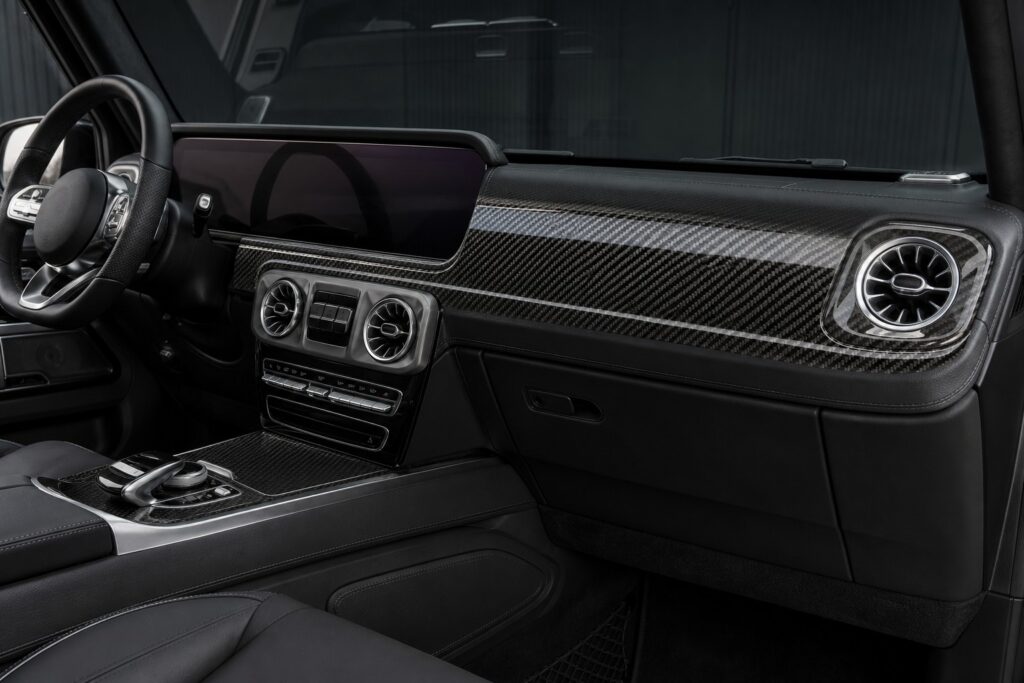
For owners building a full carbon interior, the backrest panels complete the look that front occupants and rear passengers both see — the logic behind our complete dry carbon conversion guide, applied to the cabin.
Dry Carbon vs. Forged Carbon Backrests
Two material directions dominate the market:
Dry carbon (2×2 twill) backrests — $350-$700 per pair. The classic woven look that matches hoods, mirror caps, and body kits. Best choice when your interior already runs twill carbon, because it keeps the weave pattern consistent. Glossy clear coat with UV stabilization is standard on quality panels.
Forged carbon backrests — $300-$650 per pair. The marbled, modern texture. Increasingly popular in G-Class interiors because it pairs well with OLED control surfaces and modern switchgear. Forged panels are also slightly more forgiving of minor scratches, since the busy texture hides wear.
Which to choose? Match the rest of your build. If your interior trim is twill, choose twill backrests. If you are starting fresh with a modern, textured interior, forged carbon reads as more contemporary. The important thing is consistency within visible groupings — mixing weave styles in the same view is the mistake we see most often.
Fitment and Compatibility
Seat backrest panels must match the seat architecture of your platform:
| Model | Front Backrests | Rear Backrests | Notes |
|---|---|---|---|
| W463 (1990-2018) | Yes | Limited | Verify seat adjustment mechanism clearance |
| W464 / W463A (2019+) | Yes | Yes | Airbag module clearance on some trims |
| W465 (2024+) | Yes | Yes | Confirm with new-generation seat design |
Critical checks before buying:
- Airbag clearance: backrest panels must not interfere with side airbag deployment zones. Quality panels are engineered with the correct cutouts; budget panels sometimes are not. This is a safety issue, not a cosmetic one — verify the panel design explicitly
- Seat adjustment clearance: power seat mechanisms move the backrest; the panel must clear the track and motor housings through the full range of motion
- Heated and ventilated seats: backrest panels for heated seats must not block heat transfer where applicable, and switch cutouts must match your trim level
- Mounting method: quality panels use factory clips or included brackets with no drilling into the seat frame
Installation Overview
Backrest installation is one of the easier interior carbon jobs:
- Remove the headrest and lower the seat for access
- Detach the backrest panel using trim tools — factory panels are clip-mounted on most models
- Transfer any existing hardware (coat hooks, pockets, switches) to the new panel
- Clip or bolt the carbon panel into place, ensuring all fasteners seat fully
- Test seat adjustment through the full range before refitting the headrest
Expect 30-45 minutes per seat for a careful DIY installer. Professional installation is rarely needed unless your vehicle has seat-mounted electronics that require recalibration.
Protecting the Upgrade
Backrests sit in the scuff zone, so protection matters:
- Apply a ceramic coating to the panels during installation — it makes shoe scuffs wipe off instead of sticking
- Use pH-neutral interior cleaners only; harsh chemicals can cloud the clear coat
- For families with young children, consider matching carbon kick guards or film on the lower backrest area where shoes make contact most
These are the same protection principles we detail for exterior panels in our wide body maintenance guide — interior carbon is easier to care for, but the same rule applies: clean contamination promptly and never use abrasive products.
Frequently Asked Questions
Do carbon backrests fit heated/ventilated seats?
On properly engineered panels, yes — heat transfer and switch cutouts are accounted for. Always confirm the panel matches your specific trim level and seat option before ordering.
Will they interfere with airbags?
Quality panels are engineered with the correct clearance and cutouts for side airbag zones. Verify this explicitly with the supplier — it is a safety-critical detail, not a cosmetic one.
How do I clean them?
Microfiber cloth with a mild interior cleaner. Apply ceramic coating at install for easier long-term maintenance. Avoid abrasives and alcohol-based products that can haze the clear coat.
Can I install them myself?
Yes. 30-45 minutes per seat with basic trim tools. The job is clip-and-bolt on most G-Class models.
Do they match a full carbon interior?
Yes, when chosen consistently. Pair twill backrests with twill trim, or forged with forged — see our interior carbon fiber upgrade guide for the full matching strategy.
Related Upgrades
Complete the cabin: pair backrests with our carbon fiber door panel upgrade guide and the interior package advice in our complete dry carbon conversion guide. For matching exterior carbon, start with the forged carbon door handle upgrade.
Sources
RacingPartsWorld Interior Carbon Installation Records (2021-2026, n=100+), Manufacturer Fitment Test Reports, Customer Satisfaction Survey (n=90)
Last updated: August 2026